Building Pathos: From Hackathon to Real-World Activism
We built a censorship-resistant platform for activists in 48 hours. Within hours, Venezuelan activists were using it to organize against authoritarianism.
Last weekend, four of us from Soapbox - Alex, MK, Chad, and myself - flew to Austin for the AI Hack for Freedom hackathon at Bitcoin Park. We were joined by two external collaborators: Hzrd149, creator of popular Nostr projects like Nostrudel, Applesauce, and Blossom, and Elsat from the Damus team. The premise was simple but powerful: pair developers with real activists facing real problems. No hypothetical users. No imagined use cases. Just people whose lives depend on secure communication.
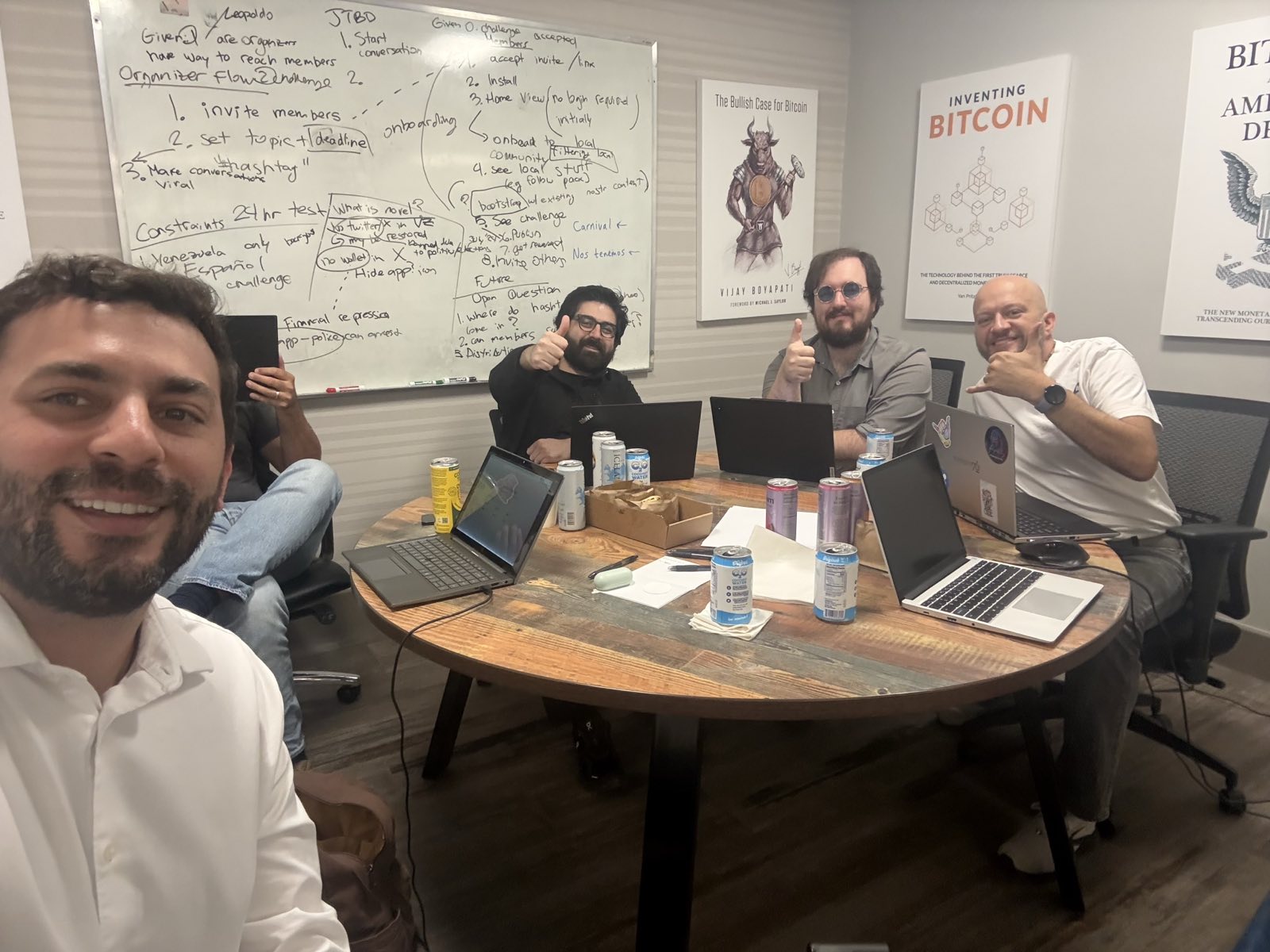
When the Problem Walks Into the Room
Our team was paired with Leopoldo Lopez, a Venezuelan opposition leader and former political prisoner who spent years in arbitrary detention under the Maduro regime. He's now co-founder of the World Liberty Congress, working to build a global alliance against autocracy.
Leopoldo didn't come with a wishlist of features. He came with problems. Real ones:
"Where are my people?"
Activists can't find their communities when they're forced to migrate between platforms.
"X was banned in Venezuela."
Centralized platforms become targets. One government order and your entire network disappears.
"$10 is huge when your bank account is frozen."
Traditional payment rails fail when regimes freeze accounts.
"The internet goes dark during critical moments."
Connectivity gets throttled or shut down exactly when activists need it most.
These aren't abstract concerns. They're daily realities for people fighting for basic freedoms.
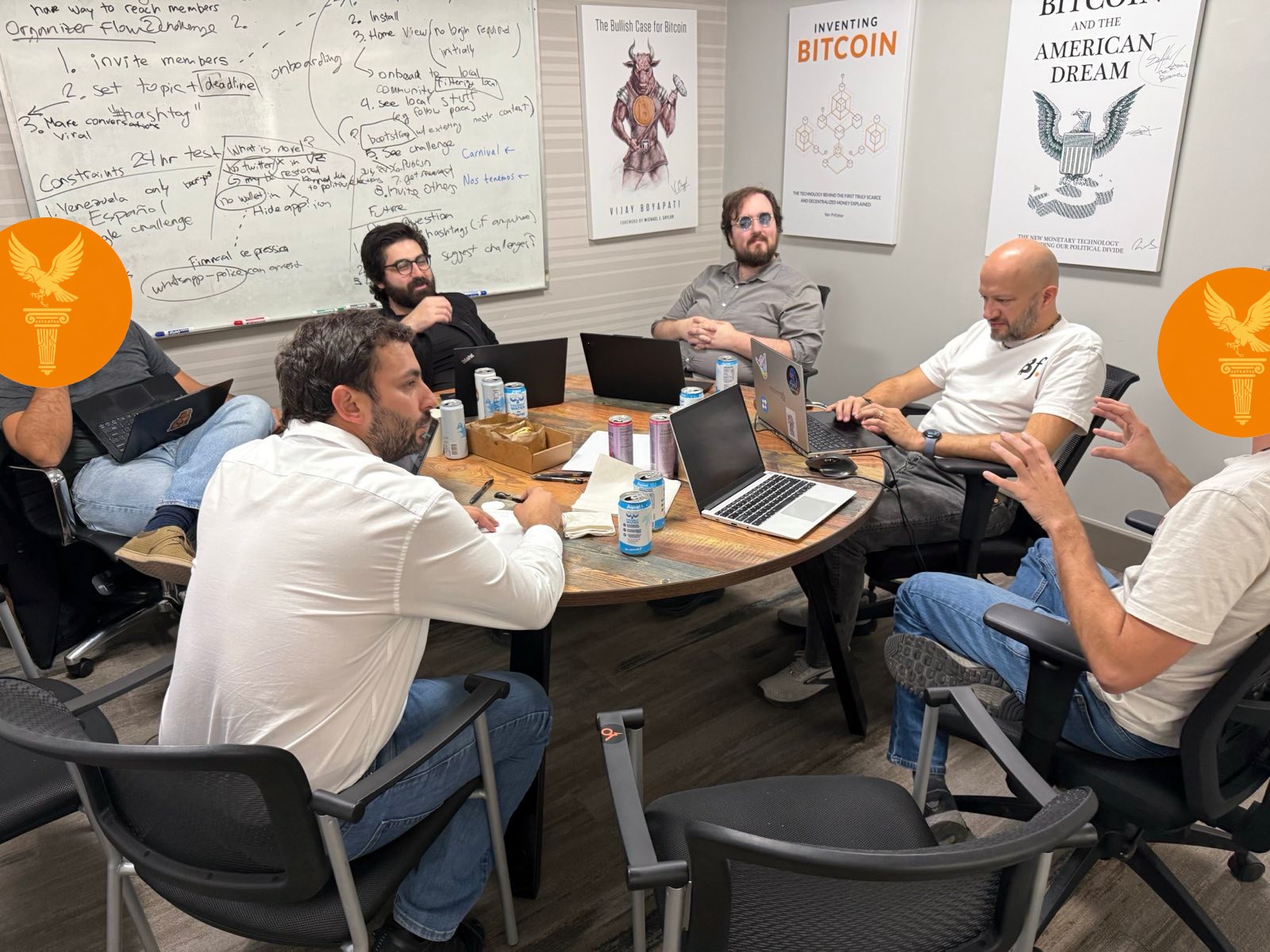
48 Hours to Build Something Real
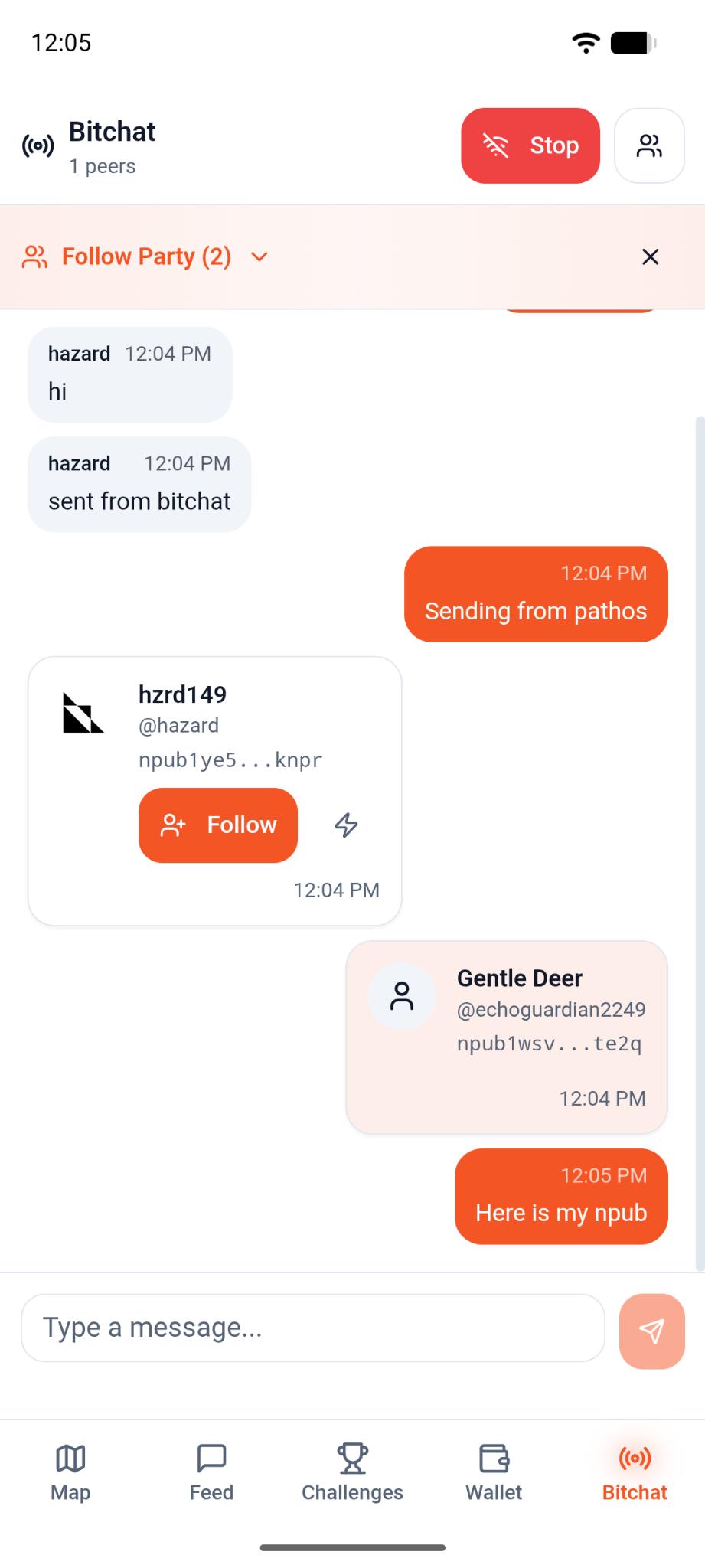
We had a weekend. Our team - Alex, MK, Chad, and myself from Soapbox, plus Hzrd149 and Elsat - got to work. Elsat acted as project manager, organizing ideas and running user experience testing. Hzrd149 cracked Bluetooth mesh BLE, getting Bitchat to work for offline communication. By early Sunday morning, we had a working app.
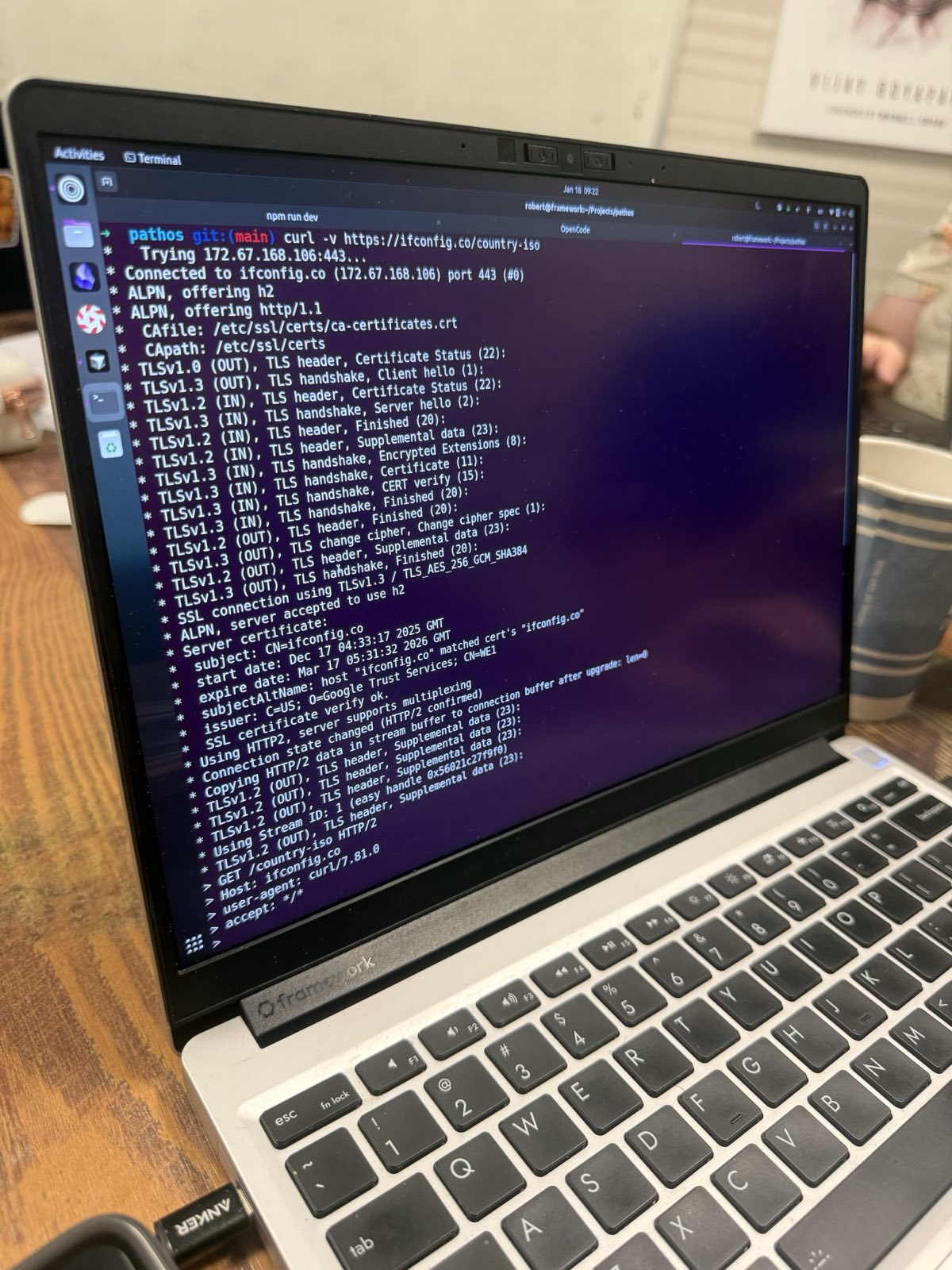
Pathos is a decentralized activist platform built on Nostr and Bitcoin. It's designed for people who can't afford to trust centralized infrastructure.
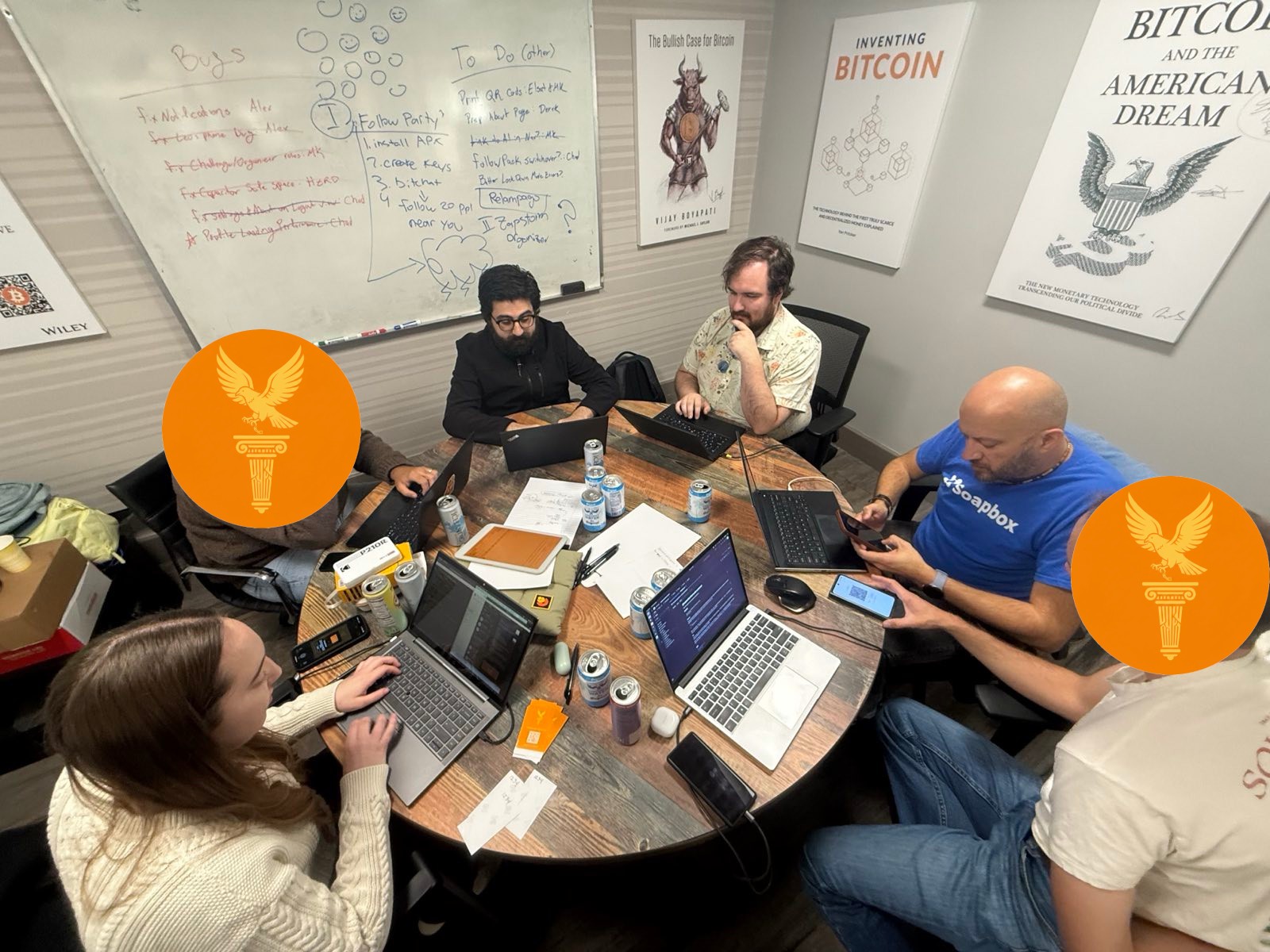
Here's what we shipped:
- Location-based feeds and a world map - Connect with activists in your country. See post activity globally.
- Activist challenges with Bitcoin bounties - Create and complete challenges. Earn sats for documenting activism, creating art, gathering information.
- Self-custodial Lightning wallet - Powered by the Breez SDK. No bank accounts required. Support activists directly with zaps.
- Country organizers - Local leaders can moderate, pin important posts, and guide efforts.
- Bluetooth mesh networking - Communicate during internet blackouts. Messages sync when connectivity returns.
- AI chatbot powered by Maple AI - A privacy-focused, contextually aware assistant. Ask it what's happening in Venezuela and it summarizes the country feed in real-time.
- Multilingual support - Full translations in 7 languages including Spanish, Farsi, and Chinese.
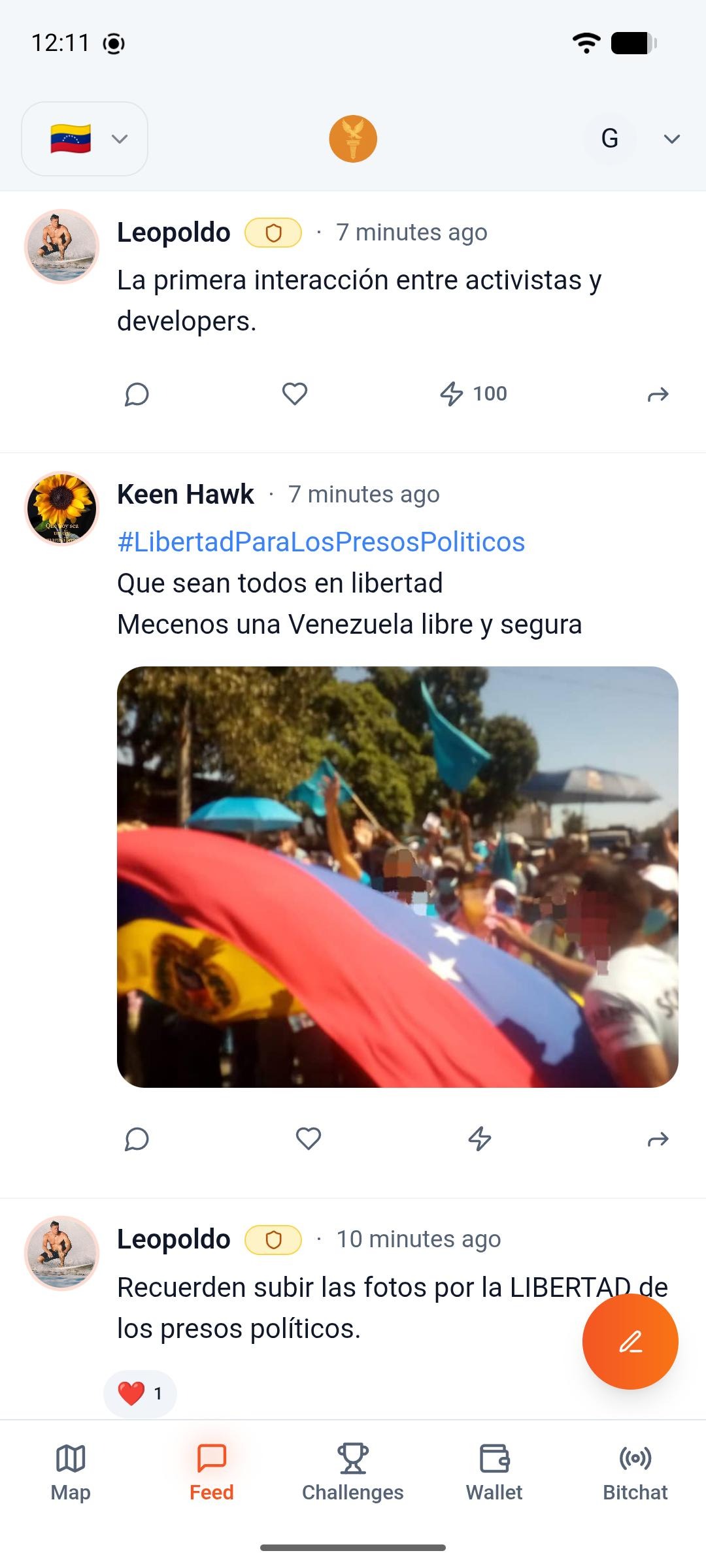
By the end of the hackathon, we had real users. Not test accounts. Not our friends trying it out. Venezuelan activists using it to coordinate.
This Wasn't a Demo
The difference between a hackathon project and a real product is whether anyone actually needs it. We knew within hours.
Less than 24 hours after launch, over 100 users had onboarded. The feedback wasn't about polish - it was about survival. Which features would help them stay safe? What happens when the internet goes down? Can organizers reach their people?
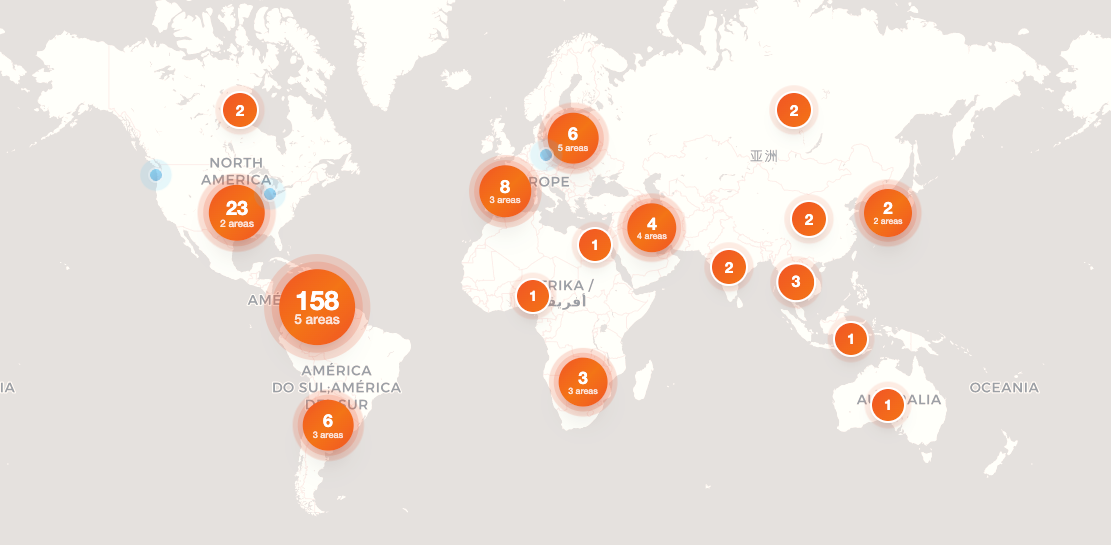
That's when you know you've built something that matters.
Our team won 25 million sats for this project. A huge thank you to Bitcoin Park and the Human Rights Foundation for organizing this event and supporting freedom tech that makes a real difference.
Why Nostr and Bitcoin?
Traditional platforms fail activists in predictable ways. They get banned. They get pressured by governments. They freeze accounts. They require identity verification. They store data that can be subpoenaed or hacked.
Nostr eliminates single points of failure. There's no company to pressure, no server to seize, no database to compromise. Your identity is a cryptographic key that no government can revoke.
Bitcoin solves the money problem. When bank accounts get frozen and payment processors cut you off, Lightning payments still work. A $10 zap from someone in Germany can reach an activist in Caracas instantly, without asking anyone's permission.
This isn't theoretical. The Maduro regime has frozen bank accounts and banned platforms. Iranian activists have seen the same. So have people in Belarus, Myanmar, Hong Kong. The tools we take for granted - payment apps, social media, messaging - become weapons when controlled by authoritarian states.
What's Next
We're transitioning from hackathon MVP to production. The app works, but it needs to work better. Faster photo uploads. More reliable notifications. Direct messaging. Video support.
The Android APK is available now at pathos.place. We're also working on additional distribution channels: Zapstore support is coming soon, along with official Google Play and Apple App Store releases. Websites can be blocked, but apps distributed through Zapstore can't be censored. That's a critical difference for activists in countries where government censorship is routine.
The roadmap extends to more countries: Zimbabwe, Iran, Nicaragua, Hong Kong. Each region has its own challenges, its own organizers, its own needs. But the underlying infrastructure - decentralized identity, censorship-resistant communication, permissionless payments - serves them all.
The Point
There's something powerful about building tools for people who actually need them. Not engagement metrics or growth hacking. Just: does this help someone stay safe? Does this help them organize? Does this help them get paid when their bank account is frozen?
That's what Pathos is for. A place where activists can find each other, coordinate action, and support one another - without asking permission from platforms or governments.
This is why Soapbox exists. Every tool we build - Ditto, Shakespeare, and now Pathos - shares the same DNA: decentralized infrastructure that no single entity can control. We're not building products for the sake of products. We're building the foundation for a world where communication, identity, and money can't be taken away by the powerful.
Freedom tech isn't a niche. It's the future of the internet. And when that future arrives, the tools need to already exist.
We built Pathos in a weekend. It's already being used in the field. And we're just getting started.
Try Pathos, follow development on GitLab, or build your own freedom tech with Shakespeare.